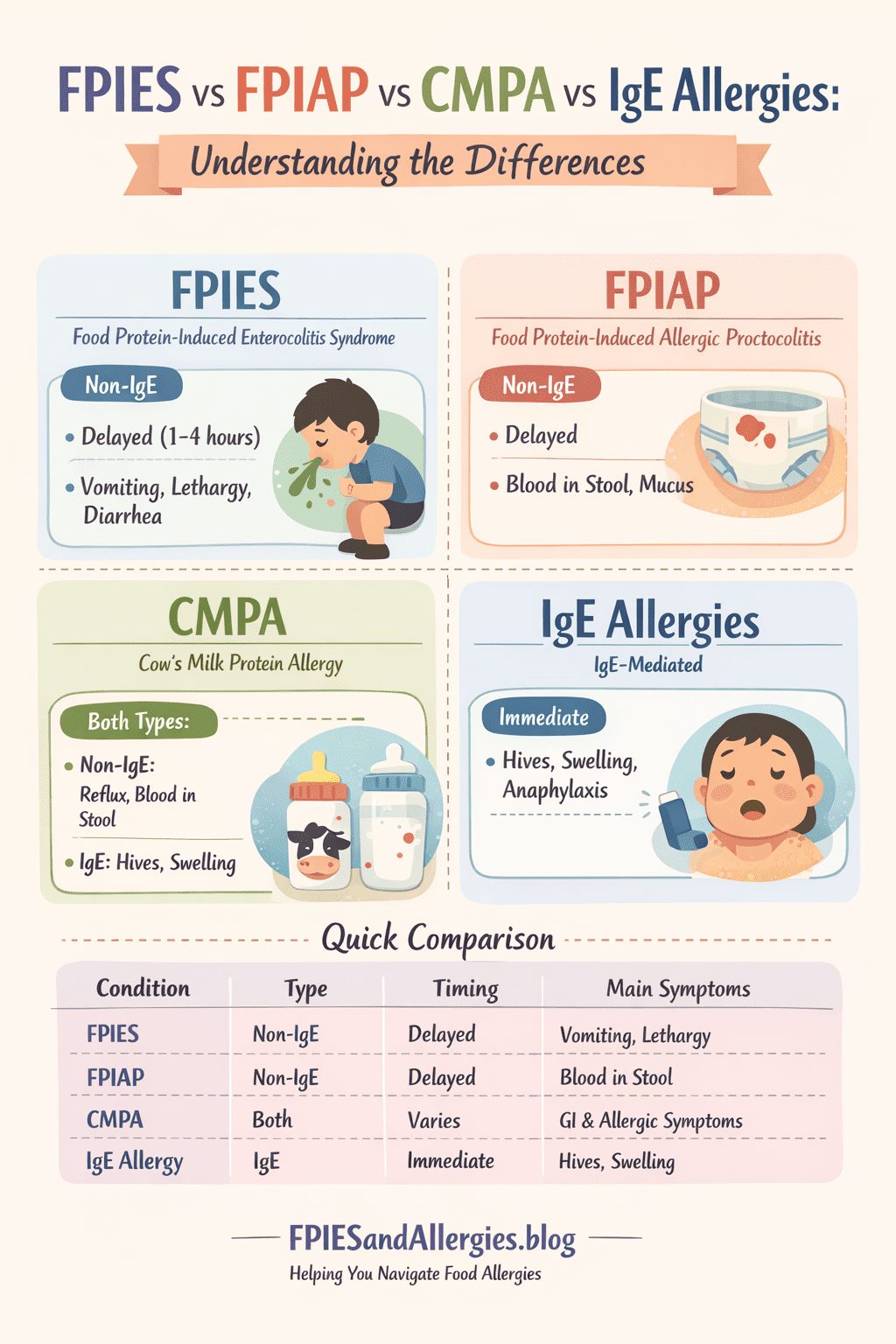
If your baby is reacting to food, you may have heard terms like FPIES, FPIAP, CMPA, or IgE-mediated allergies and wondered:
What does all of this actually mean?
How are they different?
And which one does my child have?
You’re not alone and these conditions can be confusing, especially in the beginning.
This guide breaks it down in simple terms so you can better understand what’s happening and feel more confident moving forward.
🧠 The Big Picture
All of these are food-related immune responses, but they don’t all work the same way.
There are two main categories:
1. IgE-Mediated Food Allergies
- Fast, immediate reactions
- Involve the immune system producing IgE antibodies
2. Non-IgE-Mediated Conditions
- Delayed reactions (hours later)
- Often affect the gut
👉 FPIES, FPIAP, and many forms of CMPA fall into this category.
🚨 What Is FPIES (Food Protein-Induced Enterocolitis Syndrome)?
Food Protein-Induced Enterocolitis Syndrome (FPIES) is a type of non-IgE-mediated food allergy that primarily affects the digestive system in infants and young children. Unlike typical food allergies, FPIES reactions are delayed and do not involve immediate skin or breathing symptoms.
Because of this, FPIES can often be misunderstood or misdiagnosed, especially in the early stages.
Common FPIES Symptoms in Babies
Typically, symptoms appear several hours after a trigger food is consumed, rather than immediately. The most common signs of an FPIES reaction include:
- Repetitive, forceful vomiting (usually 1–4 hours after eating)
- Lethargy (low energy, pale or floppy appearance)
- Diarrhea (which may occur several hours later)
In some cases, symptoms can escalate quickly, making the reaction feel sudden and severe.
Key Characteristics of FPIES
One of the most important things to understand about FPIES is how different it looks compared to traditional food allergies. Key features include:
- Delayed onset of symptoms (not immediate)
- Reactions that can appear intense or alarming
- Lack of typical allergy signs like hives or swelling
- Triggers often include common first foods
Common FPIES Trigger Foods
Although every child is different, certain foods are more frequently reported as triggers. These may include:
- Rice
- Oats
- Dairy
- Poultry (such as chicken or turkey)
However, my child has 17 FPIES triggers and include the below:
- Egg
- Banana
- Ground Beef
- Potato
- Blueberries
- Oats
- Strawberries
- Soy
- Rice
- Avocado
- Turkey
- Beans
- Corn
- Green Beans
- Mango
- Cauliflower
- Broccoli
She recently started to grow out of her dairy allergy!
Her safe food list includes:
- Chicken
- Quinoa
- Peach
- Plum
- Grapes
- Flour Tortilla
- Peanut Butter
- Almond Milk
- Pork
- Dairy (minimally still)
- Carrot
- Pasta (no egg)
- Apple
- Chickpea
- Peas
- Spinach
For this reason, introducing new foods slowly and one at a time is especially important.
Why FPIES Can Be Confusing for Parents
Ultimately, FPIES reactions can feel intense and frightening, especially because they don’t look like “typical” allergic reactions. Instead, they often present as delayed gastrointestinal symptoms, which can make it harder to connect the reaction to a specific food.
Therefore, understanding the timing and pattern of symptoms is key to recognizing FPIES and managing it with more confidence.
🩺 What is FPIAP?
FPIAP (Food Protein-Induced Allergic Proctocolitis) is another non-IgE condition, but it’s typically milder than FPIES.
Common Symptoms to Know:
- Is there blood or mucus in stool?
- Is your baby being extra fuss or appear to be in discomfort?
- Otherwise, is your baby generally well-appearing?
Key Characteristics:
- These types of allergies are most often seen in younger infants
- The two most common triggers are dairy or soy (even through breastmilk), but FPIAP can generally be any type of food
- Babies usually continue feeding normally
👉 While alarming, FPIAP is generally less severe and often resolves earlier.
🥛 What Is CMPA (Cow’s Milk Protein Allergy)?
Cow’s Milk Protein Allergy (CMPA) is a common type of food allergy in infants and young children. Importantly, CMPA is an umbrella term that includes both IgE-mediated and non-IgE-mediated allergic reactions to cow’s milk protein.
Because of this, symptoms of CMPA can vary widely depending on how the immune system responds.
Non-IgE CMPA Symptoms (Delayed Reactions)
In many cases, non-IgE CMPA presents with delayed digestive symptoms, which can make it harder to identify. These may include:
- Reflux
- Diarrhea
- Ongoing fussiness or irritability
- Blood or mucus in the stool
As a result, these symptoms are often mistaken for common digestive issues in babies.
IgE-Mediated CMPA Symptoms (Immediate Reactions)
On the other hand, IgE-mediated CMPA typically causes immediate and more noticeable allergic reactions. These may include:
- Hives or skin rash
- Swelling (especially lips, face, or eyes)
- Immediate vomiting after consuming dairy
- In more severe cases, anaphylaxis
For this reason, IgE reactions are often easier to recognize but may require more urgent medical attention.
Why Understanding CMPA Matters
Ultimately, CMPA can look very different from one child to another. So, recognizing the difference between IgE and non-IgE symptoms is key to identifying potential reactions and managing your child’s diet safely.
⚡ What are IgE-Mediated Food Allergies?
These are the “classic” food allergies most people think of.
Common Symptoms (Immediate):
- Hives
- Swelling (face, lips, eyes)
- Vomiting shortly after eating
- Difficulty breathing
- Anaphylaxis (severe reaction)
Key Characteristics:
- Reactions happen within minutes to 2 hours
- Can be life-threatening
- Diagnosed with skin prick or blood tests
👉 These require strict avoidance and often emergency medication (like epinephrine).
🔍 Quick Comparison
| Condition | Type | Timing | Main Symptoms |
|---|---|---|---|
| FPIES | Non-IgE | Delayed (1–4 hrs) | Vomiting, lethargy |
| FPIAP | Non-IgE | Delayed | Blood in stool, mild symptoms |
| CMPA | Both | Varies | GI + allergic symptoms |
| IgE Allergy | IgE | Immediate | Hives, swelling, breathing issues |
💡 Why This Matters
Understanding the difference helps you:
- Recognize symptoms more clearly
- Know what to watch for
- Advocate for your child
- Feel less confused and overwhelmed
💛 A Reassuring Reminder
If you’re in the middle of figuring this out:
You’re not overreacting.
You’re not imagining things.
And you’re not alone in how confusing this feels.
These conditions can take time to fully understand, but with the right information and support, you will get clarity.
🎁 Helpful Resource
If you’re navigating food reactions and want a simple way to stay organized and prepared:
👉 Subscribe below to download my FPIES Emergency Kit + Food & Symptom Tracker
It’s designed to help you feel more in control as you figure out what works for your child.
💬 Final Thoughts
While these conditions can look similar at first, the differences matter—especially when it comes to timing, symptoms, and how reactions are managed.
The most important thing?
👉 Learn your child’s patterns, go slowly, and trust what you’re seeing.
You’re doing an incredible job navigating something that isn’t simple and that matters more than anything.
- FPIES Foundation
- AAAAI: Oral Allergy Syndrome
- American Academy of Allergy, Asthma & Immunology
- American College of Allergy, Asthma & Immunology
- Food Allergy Research & Education
- National Institutes of Health
- Centers for Disease Control and Prevention

Leave a Reply